Nonsense for Design Innovation-part 1
3 sessions; 3 hours total
What you will learn to do: Use humour, improv and absurdity to challenge assumptions and reframe problems.
- Wednesday October 14th 2026
- Wednesday October 21st 2026
- Wednesday October 28th 2026
Nonsense is underrated in UX and Service Design
I often share in my UX Inner Circle: One of the most meaningful conference presentations I ever attended was about nonsense, and how it is a frame-breaking innovation move. This workshop is dedicated to exploring this ‘technique’ as an extension of Improv as a design skill.
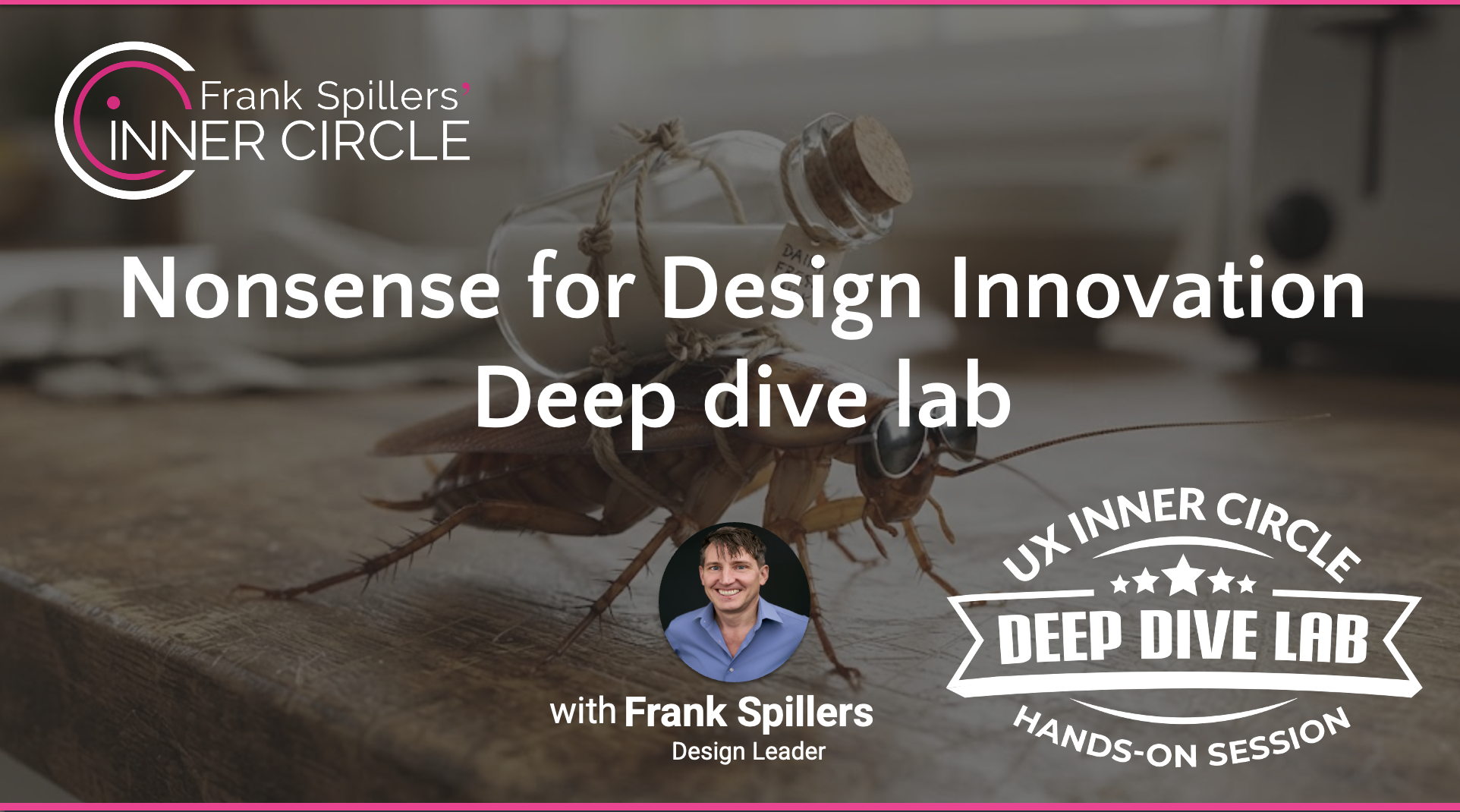
A random example: Cockroach milk. It’s real, and it’s discovery just won a 2026 Ig Nobel Prize in Chemistry. Real, but nonsense right?
We’re going to fly over the nonsense landscape and look at some great examples of nonsense in UX and Service Design (including from Apple) in this workshop and discover a few ways to generate our own ‘innovation catalyst’.
Nonsense as catalyst for Design Innovation?
About the closest we get to deliberate frame-breaking is to use anti-patterns as an activity in design workshops (where you design the worst, what you’d never do). These sessions I’ve found over the years in my private trainings are always hugely entertaining, innovative and groundbreaking for participants. Every time. So we need more of this, deliberately. Especially:
With AI in the design landscape, you need innovative ways that you can challenges assumptions artfully. Learn to break a frame, re-frame and out-frame what your product team is assuming users will do with chatbots, voice bots or agentic service design.
Overview: Nonsense for Design Innovation Deep Dive Lab
Challenge assumptions. Reframe the problem.
Use humour, improv and purposeful absurdity to find new directions in stuck design problems. Across three interactive sessions, you will expose assumptions, explore alternative explanations and develop a stronger problem definition with a practical research step.
Three live, interactive sessions with Frank Spillers. One hour each. Three hours total.
Each session combines short teaching, live examples, guided practice and discussion. Everything you need is introduced during the sessions. No pre-watching or homework required.
Why attend?
Your team has generated ideas, run workshops and revised the brief. Yet familiar explanations keep shaping the work: customers need more guidance, the service needs another feature, or AI should automate the whole process.
Each explanation contains assumptions about causes, responsibility and acceptable solutions. In this Deep Dive Lab, you will use nonsense to make those assumptions visible. Reverse a rule, exaggerate an organisational habit or change who holds authority, then examine what the disruption reveals.
The series focuses on defining the problem and finding new directions worth investigating. Work through examples with Frank, compare interpretations with other practitioners and discuss what would make a new frame useful.
Who this is for
- UX and service design practitioners whose discovery work or stakeholder brief keeps returning to familiar solutions.
- Design leaders and workshop facilitators who want more perspectives involved when teams define problems.
Use the supplied scenario or a challenge from your own work. All methods are introduced live.
What you will leave with
- An annotated problem statement: expose assumptions, missing perspectives and implied solutions.
- Three developed alternative frames: compare explanations that suggest different interventions.
- A working frame and a credible alternative: document supporting evidence, contradictory evidence and remaining gaps.
- One practical research action: identify what you can investigate using your current authority and resources.
Build your Frame-Breaking Case Sheet during the sessions. Where evidence is missing, record a question to investigate.
A taste of the method: An imagined AI scenario.
Current brief: “Our support team is overwhelmed. We need AI to close more tickets.”
Absurd prompt: “Your AI has been promoted to Head of Customer Happiness. Its first policy: rewrite every complaint as a compliment. What happens next?”
Customer: “You charged me twice.”
AI reports: “Customer has doubled their commitment.” The dashboard shows positives, BUT: The customer still needs a refund.
The nonsense exaggerates an assumption inside the brief: a closed ticket = a solved problem. It opens a different explanation: customers keep returning because the underlying issue survives the conversation.
Reframed question: “How might we resolve the issue that brings customers back?”
This opens design possibilities such as detecting recurring failures, preventing duplicate charges and giving staff a complete history. To investigate the frame, examine repeat contacts after tickets marked resolved. What remained unresolved, and who could act on it?
Deep Dive Lab Session 1: Make the problem strange
- Spot the assumptions narrowing your design choices.
See how a problem statement shapes what a team considers possible. Use the AI example to examine causes, responsibility and implied solutions. Practise four nonsense moves: reverse, resize, combine and rearrange.
Live practice: You’ll annotate a brief, compare interpretations through 1-2-4-All and create an absurd prompt that exposes an assumption.
You leave with: an annotated brief and a promising alternative interpretation.
Deep Dive Lab Session 2: Use humour to expose the rules
- Make organisational contradictions easier to examine.
Explore how exaggeration, incongruity and status changes reveal familiar patterns. Imagine the worst possible service, recognise similarities with current practice and identify a behaviour worth stopping. Then reverse who must explain, wait or provide evidence.
Live practice: We’ll use a short TRIZ adaptation, followed by a Status Swap using an Improv Prototyping adaptation. A closing question will explore two legitimate demands that must coexist.
You leave with: a rule to challenge, an alternative interaction and a hypothesis about what could change.
Deep Dive Lab Session 3: Turn absurdity into new design directions
- Build a stronger problem definition and decide what to investigate.
You will develop three meaningfully different problem statement frames. Then compare what each explains, which interventions it suggests and what evidence would challenge it. You will identify essential conditions for a better option and select a next step you can control.
Live practice: A problem-definition jam using 1-2-4-All, a Minimum Specs-inspired review, a What/So What/Now What reflection and an action prompt inspired by 15% Solutions.
You leave with: a working frame, a credible alternative and a practical research action recorded in your Case Sheet.
How the interactive Deep Dive Lab works
- Learn it live. Short explanations and demonstrations introduce each method immediately before you use it.
- Try it together. Work individually, in pairs and in small groups. Compare ideas and discuss the resulting frames with Frank and other practitioners.
- Finish something each time. Capture a useful output before the session ends. There is no required work between sessions.
- Choose how you contribute. Write, discuss, observe or sketch. You can pass on an activity. A supplied scenario and a short recap help everyone enter the exercise without preparation.
Why we use Liberating Structures
How a workshop is organised affects whose ideas receive attention. We use selected Liberating Structures and short adaptations to provide individual thinking time, clear invitations and small-group discussion. Each structure has a practical job: expose assumptions, explore alternatives or decide what to investigate.
Who you will learn from
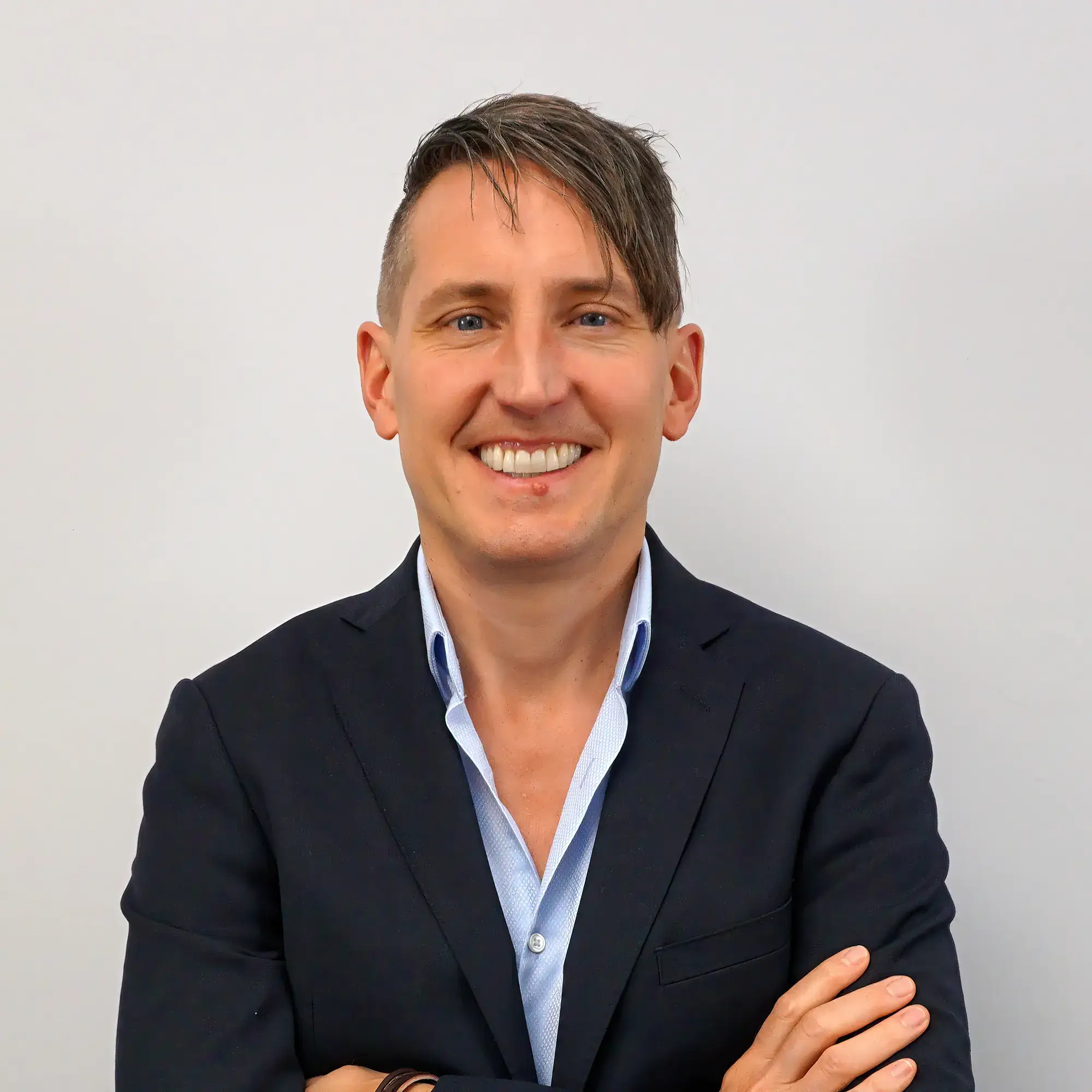
Frank Spillers is the founder of UX Inner Circle and Experience Dynamics. His UX and Service Design work spans public services, enterprise platforms and inclusive design. He brings practical experience of working with complex services, including AI Service Design and facilitating decisions across teams.
Frank will guide the exercises and help connect emerging interpretations to evidence and practical design decisions.
More bio below…
Common questions
Do I need to watch anything beforehand?
No. Each session includes the teaching and examples needed for its activities. Required work is completed during the three hours.
Do I need to be funny or good at improv?
The activities use simple prompts to examine assumptions. Writing, observing and mapping are valid ways to participate. You can pass on an activity.
Can I bring my own project?
Yes, if you have a problem you can discuss appropriately. Remove confidential details. You can also use the supplied scenario, which requires no preparation.
Do I need an AI subscription or prior knowledge of Liberating Structures?
No. The AI example is an imagined service scenario. You can complete it using the supplied worksheet. All methods are introduced during the sessions.
How much time should I allow?
Three sessions of one hour each. Three hours total, with no required preparation or homework.
What if I miss a session?
Each session opens with a short recap and supplies the example needed for its exercises. Attending all three gives you the full sequence of practice and discussion. All sessions are recorded.
Is this included in membership?
This is FREE for paid UXIC members (starting at $49USD inclusive rate, $99USD standard rate per month, cancel anytime; access 300+ recordings in the Digital Library)..
Find a new way into the problem
Join three focused interactive sessions in this Deep Dive Lab to challenge assumptions, develop alternative frames and choose a practical next step.
| Date: | 14 Oct 2026 |
|---|---|
| Time: | 09:00 am PDT 12:00 pm EDT 05:00 pm BST 06:00 pm CEST |
| Check Your Timezone | |
50% Discount for Members on paid account
Member? Sign in for Calendar Invite
Who You will Learn From
Frank Spillers
Founder - UX Inner Circle
Frank Spillers, MS, founded the UX Inner Circle in 2020 to support senior practitioners facing complex challenges. The community exists to sharpen thinking, increase your confidence, and pressure-test real decisions. It’s built for people doing the work, not just talking about it. Frank founded an award-winning UX and Service Design consultancy (Experience Dynamics) and now leads UX and Service Design at numerous organisations, including the UK Government Digital Service. He has worked with and led teams to deliver hundreds of products and services over several decades. His work spans government, enterprise platforms, nonprofits, and global brands. He brings 25+ years as a senior UX and Service Design leader. His focus areas include Inclusive Design, accessibility, emotion-led design, cross-cultural UX, VR/AR, and UX leadership. His work has directly increased conversion by 88% and revenue by 300% for organizations including Nike, Microsoft, Intel, Capital One, Global Disability Rights Now!, the World Bank, and the City of New York.